




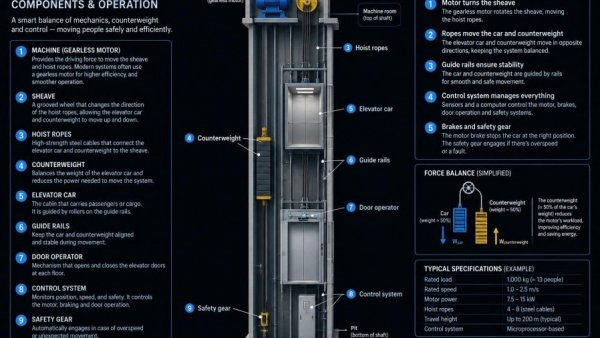
The Engineering Marvel: Understanding Elevator Counterweights
Have you ever wondered why elevators require counterweights? In the fascinating world of engineering, this seemingly simple question reveals a wealth of knowledge about physics, safety, and efficiency. Counterweights play a crucial role in balancing the weight of the elevator car, ensuring smooth and safe operation while reducing energy consumption. This article dives into the mechanics of elevator counterweights, how they work, and their importance in building design.
In 'Why Does an Elevator Need a Counterweight?', the discussion dives into the importance of counterweights in elevator engineering, exploring key insights that sparked deeper analysis on our end.
How Counterweights Function in Elevators
At its core, the counterweight system is designed to help balance the weight of the elevator when it travels. When the elevator ascends, the counterweight descends, effectively sharing the load. By using a counterweight, elevators can operate more efficiently, require less energy, and reduce wear and tear on their machinery. This innovative design not only enhances efficiency but also minimizes the risk of elevator malfunctions, thereby bolstering safety for users.
Think of it this way: when you're going uphill on a bicycle, it's easier if someone is helping to push you at the same time, right? That’s exactly what the counterweight does for the elevator system. By balancing the weight, the elevator motor doesn’t have to work as hard, which translates into less electricity used. A properly functioning counterweight system can save significantly on operational costs over time, making buildings more sustainable and energy-efficient.
A Historical Perspective: Evolution of Elevators
The history of elevators dates back to ancient times when simple pulley systems were used. These early mechanisms laid the groundwork for the modern elevators we rely on today. The introduction of counterweights revolutionized vertical transportation, especially in growing urban landscapes where buildings reached towering heights. By the 19th century, innovations brought about by engineers like Elisha Otis made elevators safer and more practical for everyday use. This advancement opened new possibilities for architecture, allowing for the construction of skyscrapers that define city skylines.
As cities expanded and the demand for vertical transport grew, so did the complexity of elevator systems. Today’s elevators are marvels of modern engineering, incorporating digital technology and safety features that would have been unimaginable in past eras. The counterweight remains a key player in this evolution, proving that even traditional mechanisms can adapt and thrive alongside new technology.
Safety First: The Importance of Elevator Counterweights
Safety is paramount in building design, and the counterweight system contributes significantly. By lowering the amount of strain on the elevator’s motor, it reduces the likelihood of electrical failures or mechanical breakdowns. Regular maintenance ensures that these systems function correctly, further enhancing the safety and reliability of elevators, which are crucial hubs of urban infrastructure.
Furthermore, in the event of a power outage, the counterweight system also helps mitigate risks. Elevators are equipped with safety brakes, and in a malfunction scenario, a well-designed counterweight can prevent the car from free-falling. This is critical in buildings with many floors, where the consequences of failure could be dire. Thus, through every aspect of their design, counterweights reinforce the commitment to user safety in public spaces.
Efficiency and Environmental Impact: A Growing Concern
In an era focused on sustainability, the efficiency provided by counterweights also addresses environmental concerns. With their ability to reduce energy consumption, elevators equipped with counterweights contribute to the overall energy efficiency of buildings. As more cities push for eco-friendly architecture, understanding the role of counterweights in elevators can inspire architects and engineers to integrate these concepts into their designs.
Take, for instance, the increasing popularity of green buildings that focus on minimizing ecological footprints. Elevators with counterweights help in achieving required energy ratings, making them integral to modern architectural discussions. By incorporating sustainable technologies, architects can not only meet regulations but also attract tenants and visitors who are increasingly eco-conscious.
Future Trends: Innovations in Elevator Technology
The future of elevators is promising, with innovations geared towards further enhancing performance. Advanced sensors could refine counterweight systems, ensuring real-time adjustments based on usage patterns, potentially leading to even greater energy savings. These might include adaptive control systems that learn from ride patterns to optimize energy use without compromising service speed.
Additionally, developments in materials technology may create lighter yet stronger counterweights, pushing the boundaries of what elevator systems can achieve in tall buildings. Imagine elevators that are able to travel at faster speeds while remaining energy-efficient due to advanced counterweight technologies. These innovations may allow for even taller buildings, redefining urban skylines as we know them.
Conclusion: Elevators and the Urban Experience
As cities continue to grow, elevators play an indispensable role in our daily lives. Recognizing the engineering brilliance behind counterweights not only enriches our understanding of this technology but also appreciates its significance in urban planning. Designing safe, energy-efficient, and effective elevators requires a blend of science and creativity that shapes our experience in vertical transport.
In a nutshell, the presence of counterweights in elevators enhances performance, prioritizes safety, and contributes positively to energy consumption—factors that are increasingly important in modern building designs. This knowledge empowers us to make informed choices about the architectural features that support our lives. The next time you step into an elevator and ascend to your destination, remember the hidden engineering marvel at work, balancing safety and efficiency as you rise through the skyline.











Write A Comment