




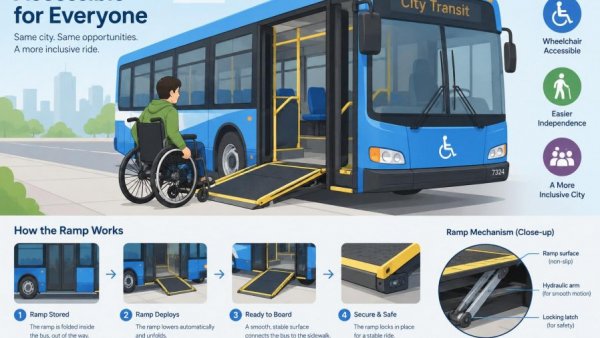
The Importance of Accessibility in Public Transport
As cities grow and evolve, the necessity for accessible public transportation becomes increasingly clear. One remarkable innovation is the "kneeling" feature of city buses, a design that significantly enhances accessibility for individuals with mobility challenges. By lowering the bus closer to the curb, it helps ensure that everyone, regardless of ability, can safely board and alight from the bus. This simple mechanism can make a world of difference, allowing more people to use public transportation freely and with dignity.
The video "Why City Buses Kneel at the Kerb" delves into the crucial role that kneeling buses play in enhancing accessibility in public transport, prompting an exploration of its broader implications.
Understanding the Kneeling Feature
The kneeling feature in buses uses air suspension technology that lowers the bus's rear when a passenger is getting on or off. When activated, the bus tilts towards the curb, reducing the distance between the bus door and the ground. This ease of access is crucial for individuals with wheelchairs or other mobility devices, as well as for seniors and parents with strollers. The act of simply lowering the bus may seem small, but its impact is profound, as it facilitates dignity, independence, and safety.
While it may seem like a small adjustment, it can reduce the risks of accidents caused by missteps. The lowering system also helps make public transport an option for those who might otherwise refrain from using it due to physical constraints. For example, parents with strollers often find it difficult to navigate standard-height buses, which can lead to dangerous situations where they might struggle to lift the stroller on or off the bus.
A Step Towards Inclusivity
With the kneeling buses, public transportation systems are creating a more inclusive environment. This particular feature serves to bridge the gap between those who can navigate public transport with ease, and those who may face obstacles in doing so. Accessibility isn’t just a feature; it is a necessity that fosters community cohesion. Promoting accessibility contributes not only to individual dignity but also enhances community participation, encouraging everyone to engage with urban life more fully.
The effectiveness of the kneeling feature is further highlighted in its ability to build confidence among users. Knowing that they can board the bus safely empowers individuals with mobility issues to travel independently. This willingness to engage with the community can lead to increased participation in local events, employment opportunities, and social interactions.
Future of Urban Transport: Progress or Stagnation?
Advancements in public transportation technology, like the kneeling feature, raise important questions regarding future investments and improvements. Cities must continue emphasizing the significance of developing all aspects of public transit, keeping pace with the growing need for inclusiveness. How urban planners approach accessibility will greatly influence participation in public transport systems.
This consideration becomes even more pertinent as urban populations continue to swell. Cities are evolving rapidly, and as they do, keeping public transport systems up-to-date is becoming more essential. The ongoing dialogue about incorporating sustainable technologies should also take accessibility into account, ensuring that eco-friendly solutions are also user-friendly. The future of urban transport lies in continued dialogue among stakeholders, ensuring that all community members’ needs are both prioritized and met.
Challenges and Diverging Perspectives
While the kneeling buses are a step in the right direction, some communities still face significant barriers. Funding remains one of public transport's biggest hurdles. In regions where budgets are tight, the implementation of accessible features may not be prioritized, leaving individuals who rely on public transport at a disadvantage. Decisions about transportation financing often leave flexibility and modernization on the backburner.
Moreover, the technology must be well-maintained to function effectively. Regular service ensures that the kneeling feature operates smoothly, meaning that educating maintenance personnel about the importance of accessibility is equally crucial. For this feature to be a reliable option for users, consistent upkeep is non-negotiable; a malfunctioning kneeling bus can lead to frustration and lost trust among users, particularly those who rely on it most.
Community engagement plays an essential role in advocating for necessary funding. Residents can organize to express the importance of accessible transport in town hall meetings or through community forums, demonstrating to local government leaders that constituents prioritize inclusivity in public spaces.
Why Accessibility Matters to Us All
Accessibility in public transport is often viewed as a discussion limited to those with mobility challenges. However, it affects us all. Improving public transport means cleaner air, reduced traffic congestion, and more vibrant urban spaces. When people don’t have to worry about how they will get from Point A to Point B, the entire community thrives. Improved public transport can lead to decreased reliance on personal vehicles, which benefits the environment through lower emissions.
Whether you’re a student heading to class, a worker commuting to the office, or a parent bringing a child home from school, walking onto a public bus should be a straightforward process. Protecting the ability of everyone to access these services is pivotal to building solidarity within cities. The convenience of accessible transport translates to shared mobility, allowing diverse community members to connect, share experiences, and support local businesses.
Conclusion: Taking Action Towards Change
The features that make public transport more accessible create a ripple effect—improving overall community wellbeing while promoting sustainable living practices. While we’ve seen significant steps forward, your support and advocacy are crucial in pushing for further advancements.
Let’s continue to work towards a community where everyone can navigate their environment with grace and ease. Advocate for improved transport systems in your area, engage with stakeholders, and participate in public discussions. Together, we can make transportation accessible for all, enhancing not just mobility, but the quality of life for every member of our community. Accessibility is not merely a feature; it is a fulcrum for societal change and a core component of a thriving urban environment.











Write A Comment