Add Row
Add Element
  • Facebook
    update
  • X
    update
  • YouTube
    update
  • Instagram
    update
  • update
  • YouTube
    update
  • Instagram
    update
Add Element
Home Health Hub
update

Strategies to Improve and
Maintain Vibrant Health

Home Health Hub logo
update
Add Element
  • Home
    • Categories
      • Regulation and Controls
      • Home and Office Design
      • Wellness Maintenance
      • Environmental Controls
      • Non-toxic Materials
      • Expert Interviews
      • Environmental Technology
    • Business Profiles
    July 22.2025
    2 Minutes Read

    Discover Kooltherm® K100: Transformative Foam Plastic Insulation for Eco-Friendly Construction

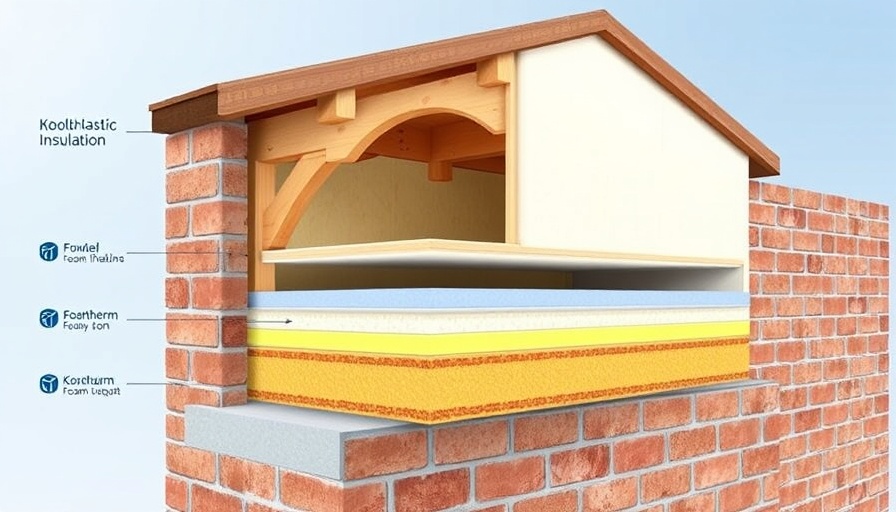
    Kooltherm K100 foam plastic insulation in building wall structure.

    Revolutionizing Insulation: Kooltherm® K100

    In the evolving landscape of building materials, Kingspan Insulation North America has introduced a game-changing product, the Kooltherm® K100. This high-performance foam plastic insulation stands out with an impressive R-value ranging from 8.1 to 8.3 per inch, positioning it as one of the most thermally efficient insulations available today. Such efficiency not only maximizes thermal protection but also allows for thinner wall assemblies, enabling project teams to leverage more of their interior space—a crucial factor in maximizing learning environments within schools or office spaces.

    Environmental Impact and Safety Standards

    Kooltherm K100 is crafted not only for performance but also for safety. It has achieved a Class A flame and smoke rating based on ASTM E84 tests, ensuring that it meets high safety standards suitable for various construction types. Furthermore, its compliance with NFPA 285 assemblies positions it well for diverse building applications. In today’s eco-conscious market, the insulation's zero Ozone Depletion Potential (ODP) and low Global Warming Potential (GWP) are significant advantages, aligning with a global movement towards sustainable and environmentally responsible construction practices.

    The Future of Building Insulation

    As the construction industry increasingly faces the dual challenges of enhancing efficiency and sustainability, innovations like Kooltherm K100 represent a crucial advancement. The blend of high thermal performance and reduced environmental impact resonates with the current focus on building sustainably. Such products could reshape how we think about insulation and energy consumption in buildings, paving the way for future regulations and standards that prioritize eco-friendly materials.

    Value Construction Projects

    For project managers and builders, selecting materials that combine cost-effectiveness and safety is essential for project success. Kooltherm K100 not only reduces material usage and construction costs but does so without compromising on performance. This balance of efficiency, safety, and sustainability translates into a greater return on investment which can be a decisive factor for organizations looking to future-proof their infrastructure.

    Concluding Thoughts

    In a world that demands constant advancements in technology and materials, Kooltherm K100 showcases how innovation can lead to enhanced safety and efficiency in construction projects. As the trend toward environmentally friendly buildings continues to gain momentum, products like this could lead the way, inspiring smarter, greener practices across the industry.

    Environmental Technology

    13 Views

    0 Comments

    Write A Comment

    *
    *
    Please complete the captcha to submit your comment.
    Related Posts All Posts
    03.14.2026

    Global Renewable Energy Installed Capacity Set to Double: What It Means for the Future

    Update The Renewable Energy Surge: A Glimpse into the Future The global renewable energy landscape is primed for unprecedented growth, with global installed capacity projected to double from 4.1 terawatts (TW) in 2025 to a staggering 8.4 TW by 2031, according to recent insights from GlobalData. This remarkable expansion, registering a compound annual growth rate (CAGR) of 13%, is predominantly fueled by the scalability of solar photovoltaic (PV) systems, consistent cost reductions, and favorable policy environments. Asia-Pacific Leads the Charge The Asia-Pacific region, especially China, continues to spearhead this growth phase. In 2025 alone, the region recorded wind installations reaching 699.5 gigawatts (GW) and solar PV capacity peaking at 1,550 GW. China's aggressive pursuit of carbon neutrality and substantial investments across the entire PV supply chain have made it a powerhouse of solar generation. With an output of approximately 1,150 terawatt-hours (TWh), China alone represents around 41% of the world's solar PV output. Current Trends Driving Renewable Energy As solar PV emerged as the largest source of renewable electricity generation in 2025, generating 2,800 TWh compared to wind's 2,770 TWh, it signifies a pivotal shift in global energy dependency. This change, propelled by cost-effective technology and supportive policy frameworks like the US Inflation Reduction Act and India's solar missions, highlights how nations are rapidly transitioning toward sustainable energy solutions. The Role of Artificial Intelligence in Renewable Energy Artificial Intelligence is shaping the future of renewable energy systems. With its ability to integrate and analyze vast data streams, AI enhances operational efficiencies within renewable sectors. Industry players are using AI to improve generation forecasting, optimize storage dispatch, and enhance grid operations, presenting a robust solution to the intermittency challenges posed by wind and solar power. Data Centers Driving Renewable Demand The surge in demand for artificial intelligence workloads is placing an increasing strain on global electricity consumption patterns, pushing data centers to seek sustainable energy solutions. Collaboration between tech giants and energy producers, such as Google's partnership with NextEra Energy to create gigawatt-scale AI data centers powered by clean energy, underscores the evolution of energy consumption dynamics and corporate responsibility towards sustainable practices. Two-Speed Expansion in the United States While growth in the renewable sector appears relentless, a closer inspection reveals a nuanced reality, particularly in the United States, where the expansion is experiencing significant obstacles. Higher project costs and slower renewables project delivery reflect a contrasting trend against the backdrop of global gains—highlighting what analysts describe as a 'two-speed' energy transformation. In stark contrast, nations like India are accelerating their renewable deployments in a comparatively favorable policy environment. Conclusion: A Balancing Act for Future Growth The anticipated doubling of global renewable energy capacity poses both opportunities and challenges. The future of energy transition hinges not only on technological advancements and cost reductions but also on overcoming infrastructural bottlenecks in grid capacities and interconnection delays, especially in key markets. Governments, corporations, and the renewable energy sector as a whole must collaborate effectively to ensure that the burgeoning demand for renewable resources translates into actionable and sustainable energy solutions. The foresight presented by GlobalData serves as a clarion call for stakeholders to prioritize these initiatives, highlighting the imperative need for a cohesive strategy to navigate the evolving energy landscape.

    03.13.2026

    Top Energy-Smart Wall Solutions for Homeowners in Zone 6

    Update Understanding Wall Assemblies in Cold Climates Building a home in climate zone 6 presents unique challenges, especially when it comes to thermal performance and moisture management. As homeowners become more aware of energy efficiency, the demand for superior wall assemblies has increased. This article explores various wall assembly techniques that enhance energy efficiency, keep moisture at bay, and reduce heating costs. The Quest for a 'Pretty Good' Wall The term 'Pretty Good House' (PGH) has gained traction among builders seeking to create energy-efficient homes without the complexities of passive house standards. In climate zone 6, different wall assemblies offer varying benefits and meet different building codes. Each option has unique properties regarding insulation, framing materials, and moisture control. Recent discourse among builders highlights five main types of wall assemblies that could be suitable for this zone: double stud walls, continuous exterior insulation, flash and batt techniques, T-studs, and advanced materials like eco-friendly foams. Industry experts stress the importance of understanding both the R-value—and construction costs—when deciding on a wall assembly method. R-Values and Efficiency: What You Need to Know R-values are integral to understanding how much thermal resistance an assembly will provide. The ideal target for a wall in climate zone 6 is about R-40 or better. Systems that achieve these levels utilize materials like cellulose insulation, ZIPS sheathing, or Strasser-type boards. The discussion from reference articles has emphasized that achieving such high R-values requires diligent attention to detail. Moisture management strategies must accompany these systems to ensure the longevity of the structure and to prevent issues like rot and mold. Continuous insulation prevents cold spots and keeps the sheathing warm, thereby minimizing condensation risk. Best Practices for Building Energy-Smart Walls Implementing best practices in wall construction not only contributes to a more efficient home but also saves money in the long term. A well-constructed wall system should prioritize airtightness and moisture control, ensuring it can withstand the climatic challenges they face. Some effective methods include using a rain screen to direct water away from the wall and installing durable air barriers that can withstand moisture. Every wall assembly considered should also enable easy access for repairs, should there be any issues with insulation or air sealing in the future. Foreseeing Future Developments in Energy Efficiency The building industry is poised to evolve as more homeowners and builders adopt energy-oriented approaches to construction. Research indicates an increasing focus on alternative materials that are both effective and environmentally friendly. For example, new innovations in cellulose and mineral wool insulation could revolutionize how walls are constructed in the future, offering sustainable options that also perform well in high-performance environments. As we move forward, embracing designs that align with energy efficiency and sustainability will become essential. Moreover, as regulations tighten, builders and homeowners alike will need to be equipped with the knowledge and resources to create energy-smart walls effectively. Conclusion: Enhancing Your Home's Thermal Performance Whether building new or renovating existing structures, the choice of wall assembly can make a significant difference in energy performance, moisture resistance, and overall comfort. By understanding the principles of wall construction and staying informed about advancements in technology and materials, builders can construct buildings tailored for the climate challenges specific to zone 6. If you're interested in maximizing your home's efficiency and comfort, explore the latest advancements in energy-smart wall assemblies, and consider consulting professionals who specialize in these modern building techniques.

    03.13.2026

    Maximize Your Home's Efficiency: The Importance of Attic Baffles

    Update Understanding Attic Baffles: What They Are and Why They're Necessary Attic baffles, often referred to as insulation stops or rafter vents, serve as crucial components of roofing systems, particularly regarding effective temperature and humidity management. Positioned between soffit vents and insulation layers, these lightweight panels serve an essential role by ensuring that the airflow from the outside effectively circulates through the attic, preventing insulation from blocking necessary ventilation. The significance of attic baffles is magnified in regions with extreme weather conditions, especially in the Pacific Northwest, where moisture control is paramount. The Role of Attic Baffles in Home Efficiency Proper ventilation in attics balances heat and moisture, contributing significantly to a home's energy efficiency. Attic baffles prevent insulation from covering soffit vents, ensuring a continuous flow of air. Without them, blocked airflow can cause several problems: condensation may form, leading to mold growth, and insulation can settle in a way that diminishes its effectiveness. Homeowners are thus encouraged to consider the installation of attic baffles when upgrading insulation systems or when retrofitting older houses. Why Adequate Ventilation Matters Maintaining effective attic ventilation not only preserves the insulation’s functionality but also safeguards the structural integrity of the roof system. Poor ventilation may lead to uneven roof temperatures conducive to ice dam formation in colder months, while the absence of airflow can lead to moisture buildup and result in severe issues such as wood rot and compromised indoor air quality. Additionally, for regions prone to mold growth, like Seattle, ventilation provided by baffles becomes even more critical. Installation Considerations: DIY Versus Professional Help While the installation of attic baffles may appear straightforward, homeowners should approach with caution. The precision of placement significantly influences their effectiveness in promoting airflow. Using materials such as cardboard, PVC, and waterproof foam, the installation involves placing the baffles securely between rafters. Achieving a professional installation can prevent future complications and ensure the longevity of your attic system. Conclusion: A Small Investment for Long-Term Benefits In essence, installing attic baffles is not merely an optional upgrade; it’s an investment in your home’s overall functionality and comfort. Beyond preventing major future repairs, they can help mitigate energy costs, enhance indoor air quality, and reduce the potential for mold growth. As homeowners consider their options for insulation and airflow enhancements, attention to attic baffles should be integral to the decision-making process.

    Terms of Service

    Privacy Policy

    Core Modal Title

    Sorry, no results found

    You Might Find These Articles Interesting

    T
    Please Check Your Email
    We Will Be Following Up Shortly
    *
    *
    *